Search This Blog

21 November 2012

The Trip To Extremadura - Part 1

Sorry everyone for such a long wait for my next post! I hope you enjoy reading about my trip to Extremadura!

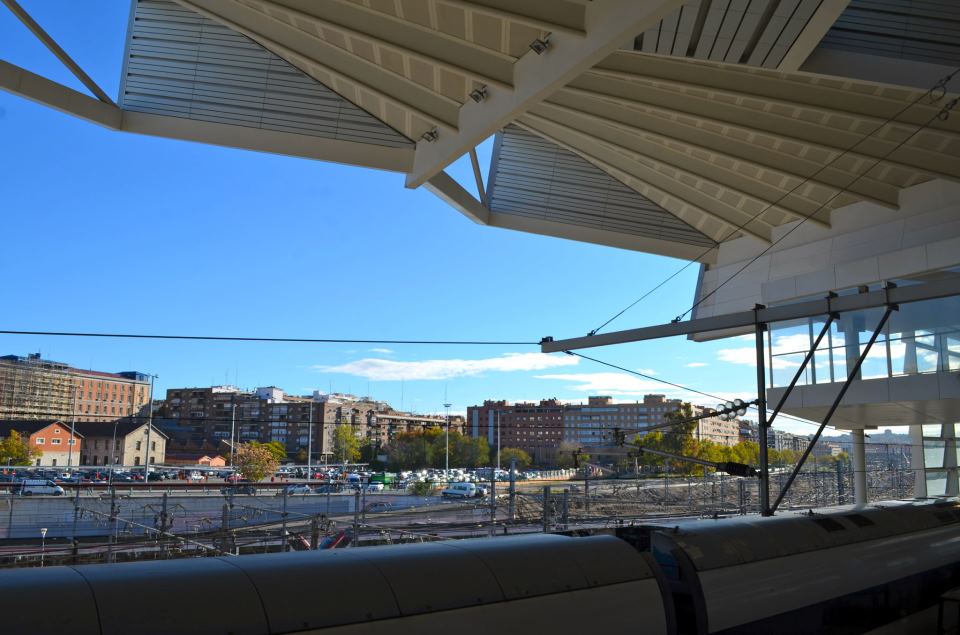
I woke up at 6:30 Monday morning, all excited for the five-day trip to Cáceres! As I waited for the 34 bus, I was a bit nervous because I didn't know if I had enough time to make it to the Estación de las Delicias (The Delicias Station). It was 7:35 am and I had to be there at 8. I arrived with time to spare. Even if I had been a few minutes late, it would've been okay because the train we were taking wouldn't leave until 8:30. The two teachers accompanying us, Oriol and Álvaro, just wanted to make sure we got there with enough time. The train, called El Ave, is the fastest train in Spain. As a comparison, the train would take an hour and a half to get to Madrid (where we were going) compared to four hours on a bus. Quite a difference, which is why we took the train in the first place I'm guessing. If we had taken a bus from Zaragoza, the trip to Extremadura would've been about 7 hours. Too long. 


Us waiting inside the Estación de las Delicias

El Ave was very nice. It glided across the earth, and its shadow weaved back and forth on the hills, looking like a snake. Inside all the seats had a headrest, a table, and a footrest. There were also mini-TV's. It was basically like the inside of a small plane. 


El Ave!

Madrid!


Upon arriving in Madrid we walked straight to the bus that would take us to Extremadura. It was parked outside the station, so we were able to see a tiny part of Madrid! The capital of Spain! Like the train, the bus was also very comfortable. Apparently the typical yellow school bus we associate with the US doesn't exist here, so for all of our school trips we get luxury buses, which are huge and, as I've already said, very comfy. The bus ride took about four hours, and the first city we visited in Extremadura was Trujillo. 


We've finally in Extremadura!
The countryside


Cows

Here I will pause to explain a little about Extremadura. It's famous for several reasons. First, i's the place where many of the conquerors of the Americas were born. For example, Hernán Cortés (the Aztecs), Fernando Pizarro (the Incas), and Balboa. Second, the ham from the community is one of the best in Spain. It's called jamón ibérico and it's from black pigs that only eat a certain kind of nut that grows in the community as well. Third, many of cities have Roman ruins. We visited several of them. I'll add another thing that I noticed and which I liked a lot. Extremadura is much greener than Aragón and therefore for me much prettier. The views that we saw were amazing. 

Now back to Trujillo. We arrived in the city after lunch, which we had eaten in a restaurant. The bus dropped us off in the central plaza (La Plaza Mayor). It was very pretty. There was a fountain and next to it a statue of Pizarro mounted on a horse. He was born in Trujillo. Álvaro gave us all maps of the city with arrows that we followed. The city has many palaces built by the families of the conquistadors. They are very rectangular and closed off. We did not see the inside of any of them. We climbed to the top of the city and there we saw a castle. But that was insignificant compared to the view! On top of the hill, we could see for miles. Very green grass, ancient walls, the mountains in the distance. It was beautiful. 


Us in front of the statue of Fernando Pizarro in
the Plaza Mayor of Trujillo

One of the palaces built by the conquistadors' families

Climbing to the top of Trujillo


The castle!


Me and Sydney

Amazing view, very green with a lot of Roman ruins


Me and Gabby

Walking back down


Interesting looking building (Jordan)

We boarded the bus and drove to the second city, Cáceres, where we stayed in a hotel for the first three nights. The hotel was called Alfonso IX, who was a Spanish king. Oriol and Álvaro assigned us our rooms and roommates. I like both my room and roommate. We stayed on the third floor and we we got a good view from our only window. For the rest of the day we had free time, so three friends (Nate, Kaitlyn, and Sydney) and I walked around our new home for the next four days. When we decided to eat dinner, we chose a small Italian restaurant. I had a sub with meat, tomatoes, lettuce, and mayonnaise with tutti-frutti ice cream for dessert. We remained in the restaurant for about an hour, talking and laughing. I really enjoyed it. 


My room in Cáceres!

The view from my room's window

The hotel's dining room
The next day we visited Mérida. We first went to see a Roman aqueduct! It was very cool. A lot of storks like to perch on top of it. Storks in Spanish is cigueñas. To explain what they are in Spanish, the teachers say that they bring the babies. Next we went to the National Museum of Roman Art in the city. The museum itself was huge and contained many Roman statues, columns, and mosaics. We went underground to see an old home. Of course during that time the home wasn't underground. We've just built on top of it. We also saw an old Roman road. Afterwards we visited an old temple. In my Art History class we've learned about the Roman temples and their different parts. I liked that I could name the general structure of the temple. Next we had free time to wander around and eat lunch. I was with the same three friends as yesterday. We walked down a big street and at the end there was a statue of Romulus and Remus feeding from a female wolf. I wondered why a statue of Rome's origin was in Spain, but Mérida was a Roman city, so it makes sense that the statue is there. To the left of the statue was a very long bridge that went over the Guadiana River. We stayed there because it was a very nice spot to take in some sun and to relax. 


The Roman aqueduct!


Kaitlyn, Sydney, and me

All of us with Álvaro! He's wearing the green sweater.

All of us with Oriol! He's wearing the gray sweater with
sunglasses.
The storks! Cigueñas.
The Museum of Roman Art


A model of the Roman Mérida.

Ideal Restitution
25 B.C. - 1300's A.D.
Scale: 1/1000

Paintings of the gladiator and animal fights.


Top of a Corinthian column. 

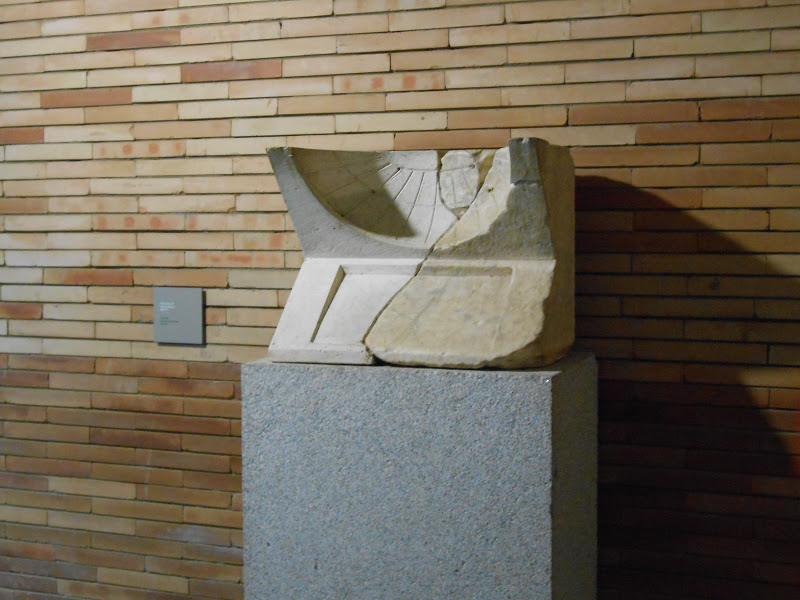
Sundial.

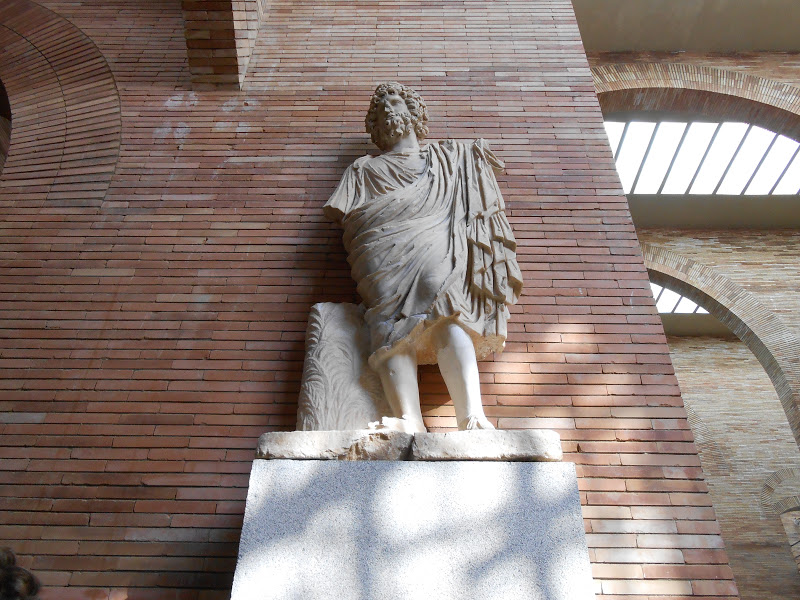
A Roman god.

A full column. 

Mosaic.


The old Roman road.


I think this was the dining room in the house.

What the house would've looked like.


The statue of Romulus and Remus.
The Roman temple.


The very long bridge!

The Guadiana River!
Nate, Sydney, and Kaitlyn


A little before 4 pm we returned to the whole group because we were going to visit more Roman ruins in Mérida together. I was very excited to see the Roman amphitheater and theater. I asked if we were going to see a Roman circus also, but it's just a field with the outside wall remaining, so it's not much to see. But I did get a glimpse of it on the bus ride back to Cáceres. I still wish we had gone to see it. Anyway, we first visited the amphitheater. In Art History we had also learned about the amphitheater, theater, and circus, but it's amazing to be able to see them in person. The amphitheater was used for the most grand shows. The most well-known is that of the gladiator which is where the thumb signs of "yes" and "no" came from. When one gladiator was about to kill the other, the former would look at the emperor in the stands to see if he should kill the other. If the emperor gave a thumbs-up, the other gladiator could live because he fought valiantly, but if it was a thumbs-down, he had to die. Other popular shows were men against lions and ship battles. For the latter the arena would actually be filled with water. The subterranean level where the animal cages and gladiator "lockers" were was excavated. It was in the shape of a cross. Next we visited the theater. The Romans took many artistic and architectural ideas from the Greeks, and the theaters were one of them. In our group we had some students in the Theater class, so we wanted them to show us something since we would probably never have a chance again to be in a real Roman theater. It was the perfect place to perform. One of the Theater students did his mime, which was hilarious! I actually cried. He pretended to be a king that went off to battle and then returned. The battle scenes were the most fun because he ran across and behind the stage, using his stuffed animal dog that he had brought as the enemy. Other people were in the theater and watched the mime, too. After him a woman sang two songs. I didn't know or understand either of them, but Oriol told us that the second song was from a Spanish opera. There was something very magical about the theater. It was like a time machine. I could pretend that I lived during the time of the Romans. I didn't want to leave. On our way back to Cáceres we stopped at the river during the sunset. It was very pretty. Álvaro told us that we had made a full circle because we started the day with the aqueduct and ended the day with its water source.  


The amphitheater!


The Roman theater!

The stage.


The chorus where the authorities sat.
The beautiful sunset.


The next day, Wednesday, was dedicated to seeing Cáceres. First we visited the old part of the city, where the Jews lived. In the archway to that part of the city, there was a plaque sort of thing on the ground in the shape of the Iberian Peninsula which meant that the Jews lived and were protected there. This weekend in Cáceres they celebrated when the city was part of the Roman empire, so banners were strung up among the buildings and people were setting up different stands. There was a Jewish castle made of adobe and some palaces. One building we passed is very important because it's the only one with a part made with bricks. Álvaro told us about some nuns that never leave the monastery and that also make and sell sweets to people. He bought some for us that had pumpkin filling and they were delicious! Some students bought some afterwards for their host families. Next we visited an underground cistern where water was stored in case of emergencies. When it would rain the water was collected in pipes that led to the cistern. Bugs would also sometimes fall into the water, so an eel was put in it to eat all of the bugs. Afterwards we visited the San Francisco Javier church. When I entered it I was amazed by the all golden display at the front. It was made from wood with a golden coating. We climbed up two small spiral staircases to one of the towers, which gave us a good view of the surrounding area. 


The symbol in the shape of the Iberian
Peninsula.

Banners.


The building made with bricks.

The door where people can ask the nuns for sweets.

The treat Álvaro bought for us.


The cistern.


The San Francisco Javier Church.


The golden-covered front.

View from a tower on top of the church.


05 November 2012

El Día de los Santos (All Saints' Day) y Aguarón

Last Thursday, November 1st, I didn't have school because it was All Saints' Day. All the schools had the day off and my host mom didn't have work, so she, my host dad, and I went to Aguarón Wednesday afternoon. 

I finally finished the 1500 piece puzzle that I had been working on for the past two weeks! I felt proud of myself that I was able to do that, of course with help from Rosa. I also felt a little sad 
about having to pick it all up because I had put in a lot of time and effort, but it couldn't stay there forever. 


I watched a movie called "The Queen." It was about Queen Isabel II, the Prime Minister Blair, and the effect Princess Diana's death had on the Queen. At the beginning the Queen seemed cold and distant and her people complained about it, but at the end she told Blair that she was brought up to think that her people would want her to act unaffected, indifferent, and so she did such that. I think she learned her lesson in the end, and she and Blair got along really well. 

We stayed over Thursday night. I had school on Friday and Rosa had work, so we left Aguarón around 8 in the morning so that I could arrive to my 9 am class on time. We were going to return to the pueblo after Rosa and I got out of work and school that afternoon, so I left a lot of my things in the pueblo. 

On Friday night I watched a movie called "Cold Mountain," which stars Jude Law, Nicole Kidman, and Renée Zellweger. It was about the Civil War and I thought it was very good. 

On Saturday I got up around 10 am, ate breakfast, and soon afterwards went for a walk with Beatriz, Rosa, and Kim (the dog) through the mountains. Kim was very excited because he was born in Aguarón, and so the pueblo feels more like home to him than Zaragoza does. 

About twenty minutes into our walk we met one of Rosa's friends in the pueblo, María Jesús, with her dog, Leo, who is a year old and whom she found in the streets. She and I had met once before. All of us continued along the path with Kim and Leo running ahead and sniffing around. We passed many gardens, trees of different nuts (pecans and almonds), and vineyards. The trees grow naturally there, and we picked some of the nuts and ate them! Rosa accidentally gave me a bitter almond, but I ate it anyway. I also got to eat some of the grapes from the vineyards, and they are smaller than the ones in the US and have small seeds that you can consume, too. They were so good! Very sweet and juicy. We saved some of the nuts, putting them in our pockets. We also happened upon some wildly growing mushrooms which María Jesús wanted to save to show to her husband who apparently is an expert with mushrooms, or can at least identify them easily. She picked them up and put them in an empty plastic bag she was carrying. Then Beatriz climbed up the side of the hill where the mushrooms were found to find more. She did, very small orange ones, which I guess are one of the best kinds. After that we all did a little treasure hunt for more edible mushrooms, climbing up the hill and looking around. I didn't find any, but they found quite a lot. We did this for at least half an hour. When we finished we returned to the pueblo and went straight to María Jesús' house to ask her husband about the mushrooms. I'm not quite sure about what happened, but I think most of them weren't any good. We left and walked back to our house. A car had just left the driveway when we entered it, and we saw Jesús holding a plate full of giant, orange mushrooms! His friend who had just left gave them to him. No wonder we couldn't find any! It was close to 2 pm, so we set the table for lunch and Rosa started cooking the meal. We ate the mushrooms fried and they were very good. Afterwards I did some homework and later that night, after dinner, I watched another movie called "Shall We Dance?" It was more for relaxation. 


One of the gardens

Trees changing color!

Olive trees

Vineyard

Beatriz and Kim


Almond trees


The tiny orange mushrooms

Where we searched for the mushrooms


María Jesús' dog, Leo


On Sunday I got up around 10:30 am. A little after breakfast Rosa asked me if I wanted to meet her friends who had a piano they said I could practice on. I said yes, and so I went with her. Their names are Mari Carmen and José, and they are some of Rosa's best friends. One of their nieces, Carla, is living with them right now. Their family is very musical they told me. Carla plays the flute, and two of the grandparents' children teach in conservatories. The piano itself was quite old and some of the keys sounded funny, but overall I'm quite happy that I can use it. I practiced for about an hour, then Jesús came to say hello to Mari Carmen and José, and after I walked home with him. It was almost lunchtime. After we ate I did some homework, and around 4 pm we left Aguarón.